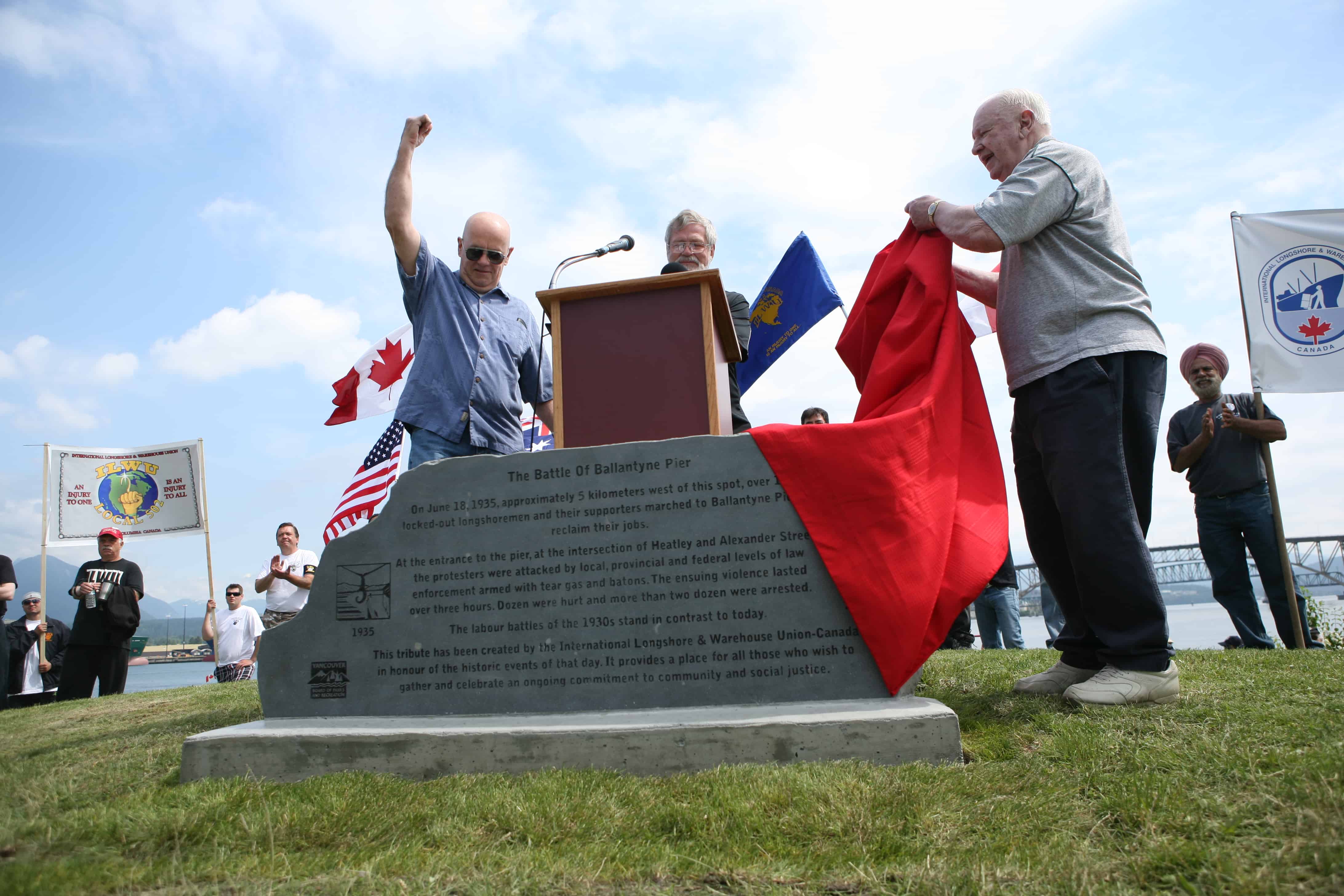
Remembering the Battle of Ballantyne Pier
Today, June 18th marks the 85th anniversary of the Battle for Ballantyne Pier.
Over the past few days, we have posted pictures and related materials leading up today.
Today we share this video of past and present ILWU Canada leaders talking the importance of the Battle for Ballantyne Pier.
As you watch the video and reflect on the events of that day ask yourself, can it happen again? Has it happened again? If we were out on a long term picket, could we be attacked in the same way?
It wasn’t possible to plan an event for today but I encourage everyone to make time and head to the monument at new Brighton park. Read the words on the monument and see how they ring true to this day.
Dan Kask
2nd VP
An injury to one is an injury to all
Below are some photos from the 75th Anniversary in 2010


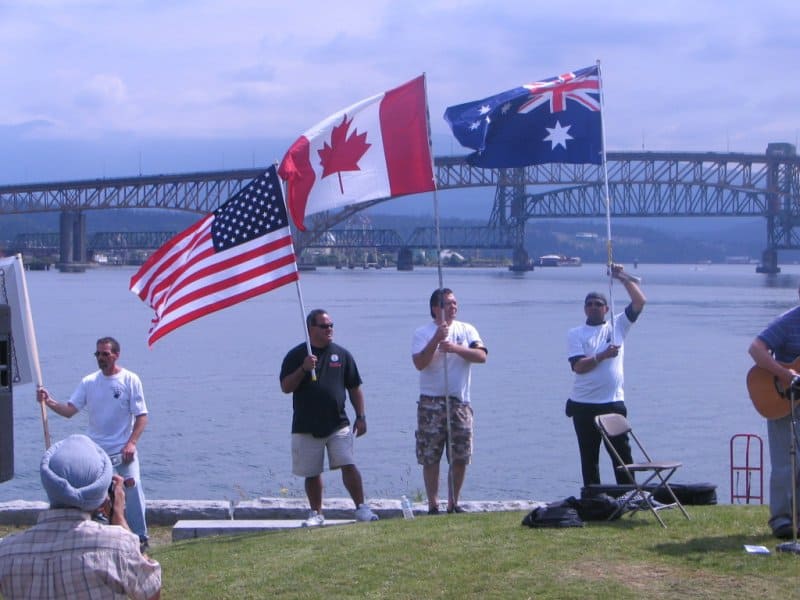
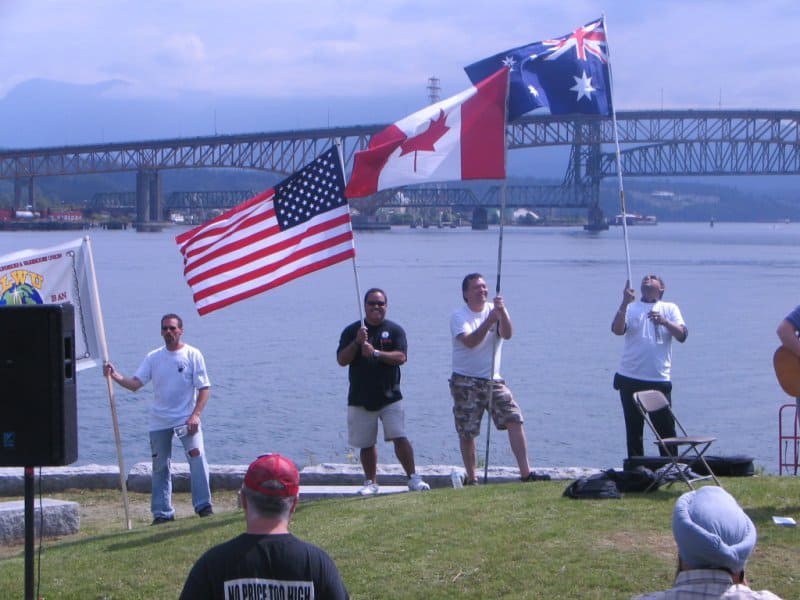
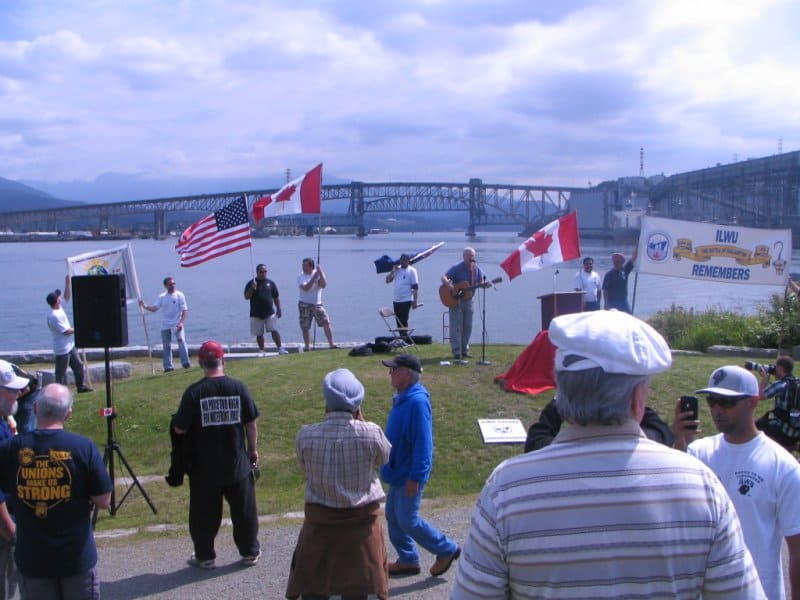
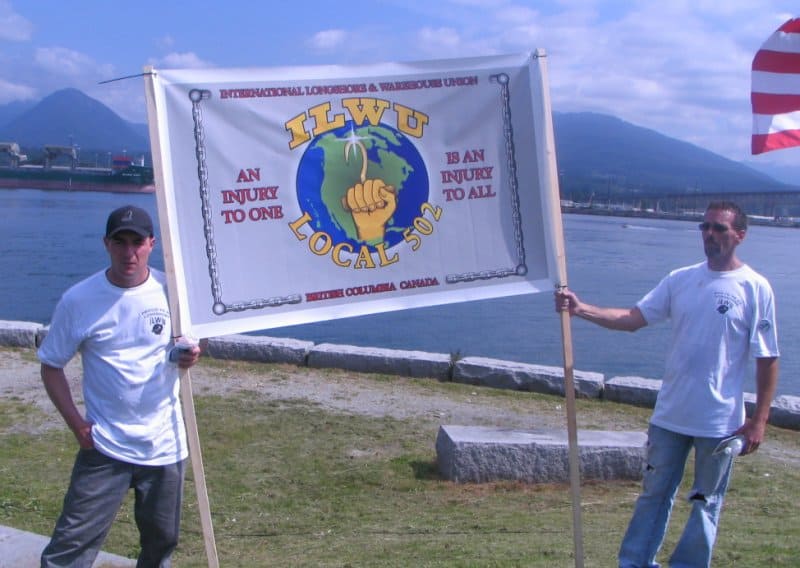
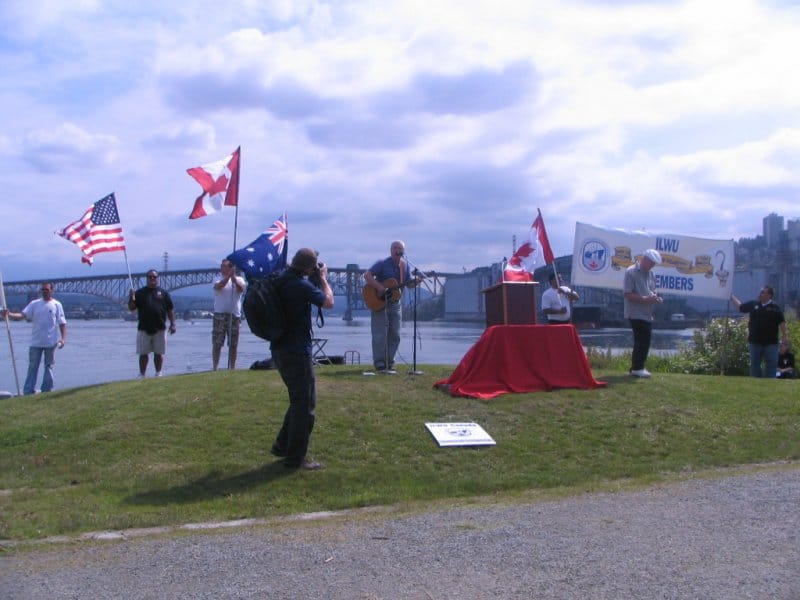
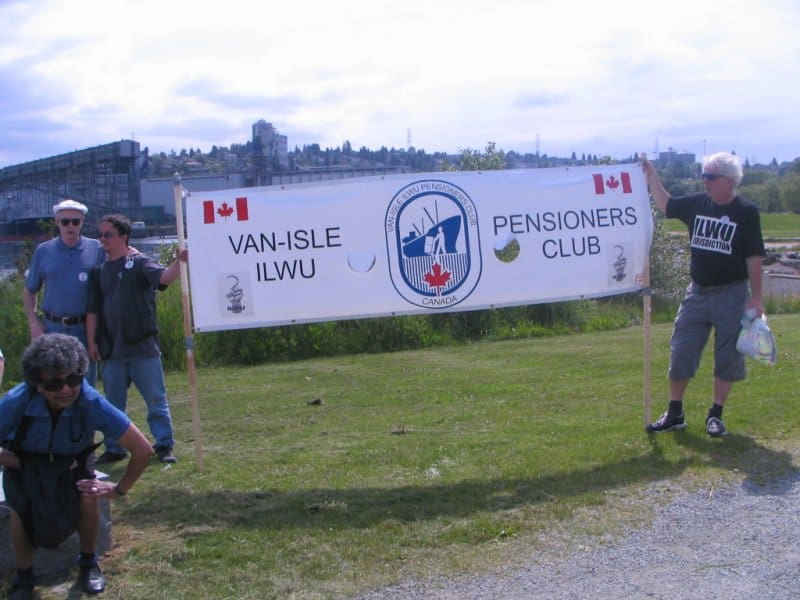
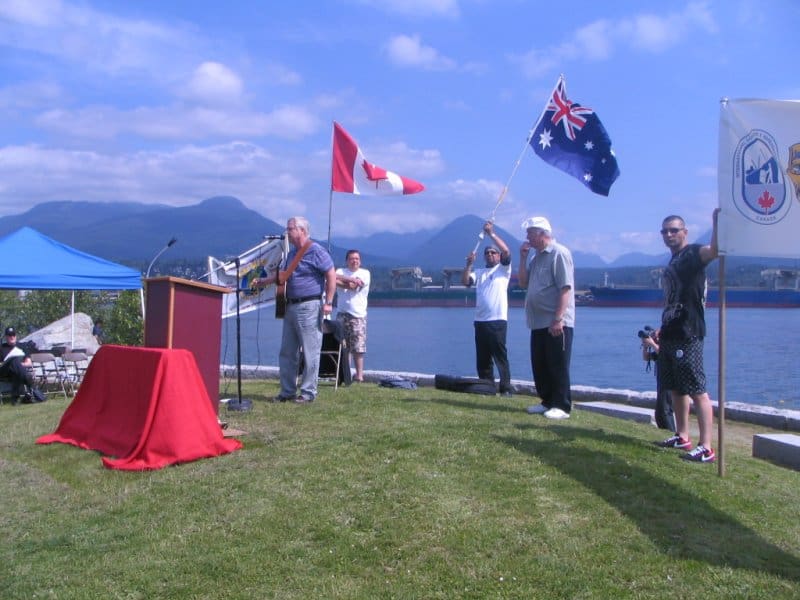
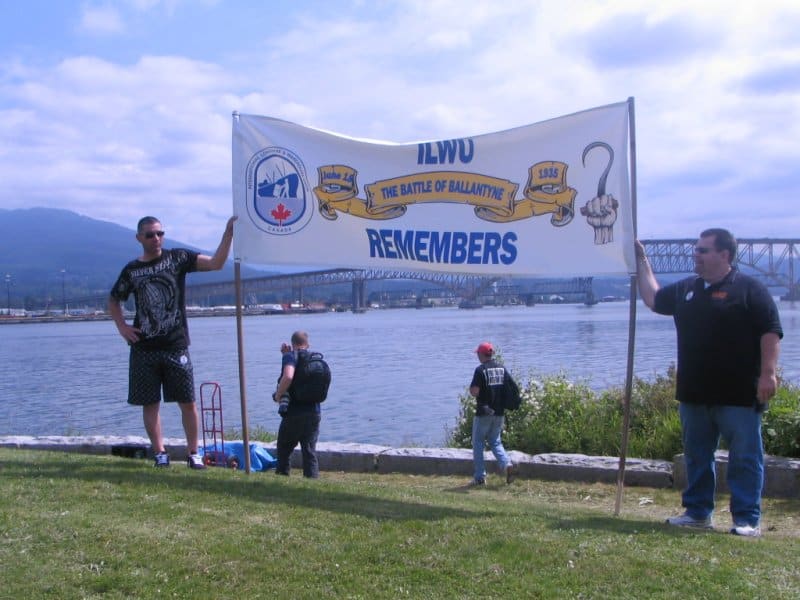
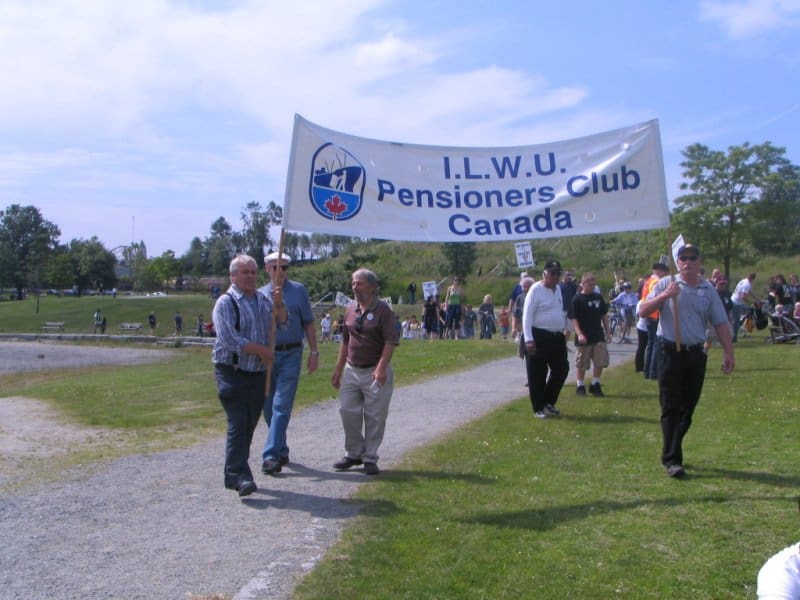
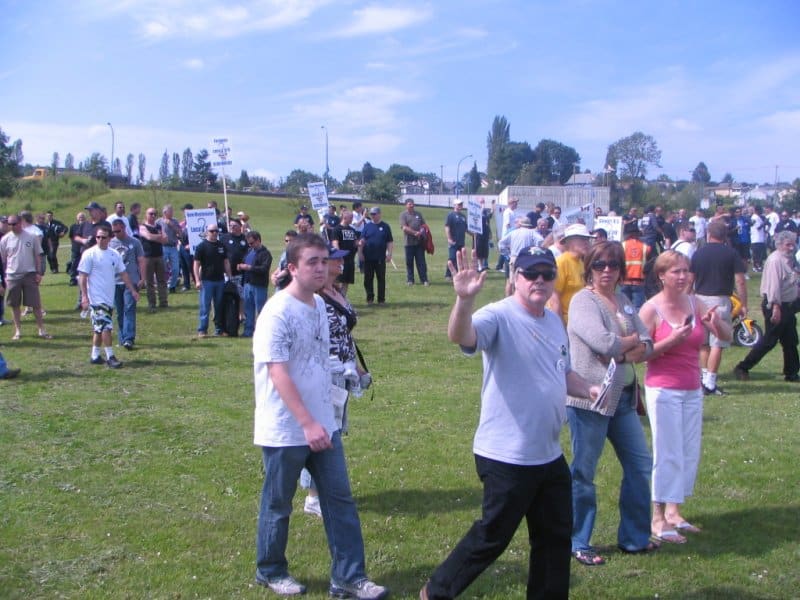
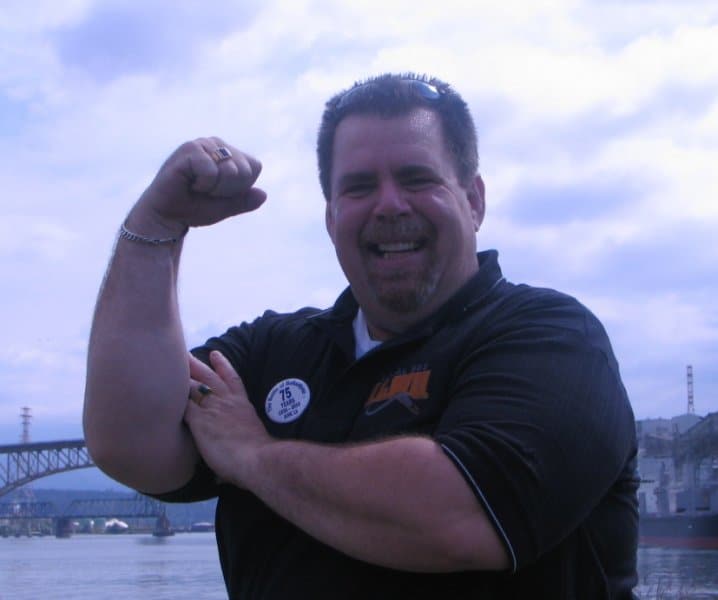
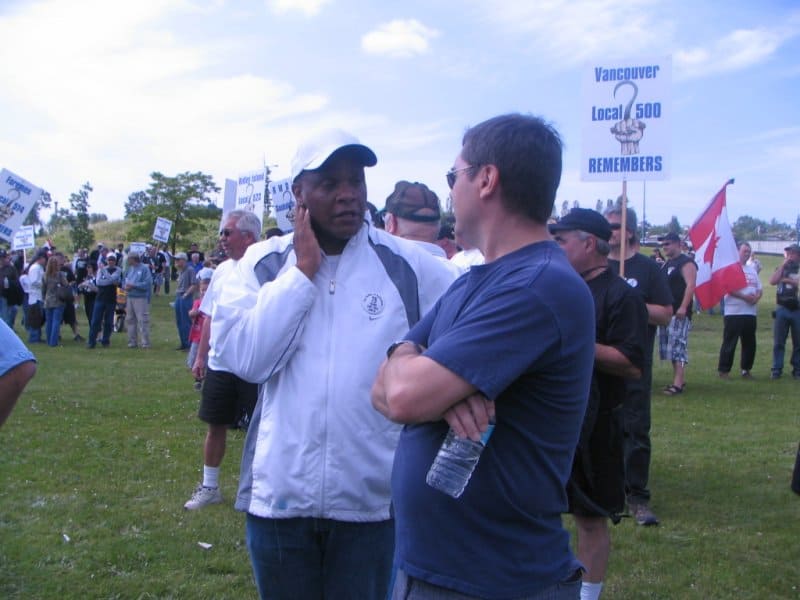
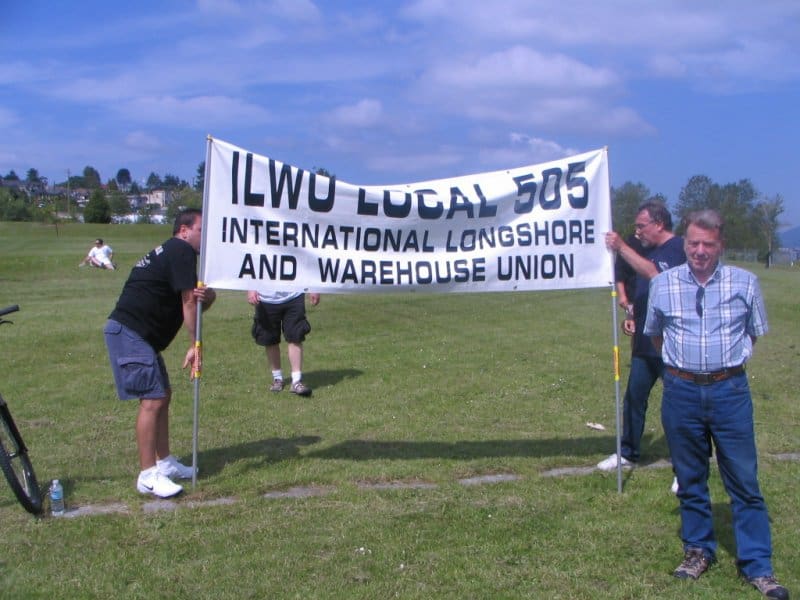
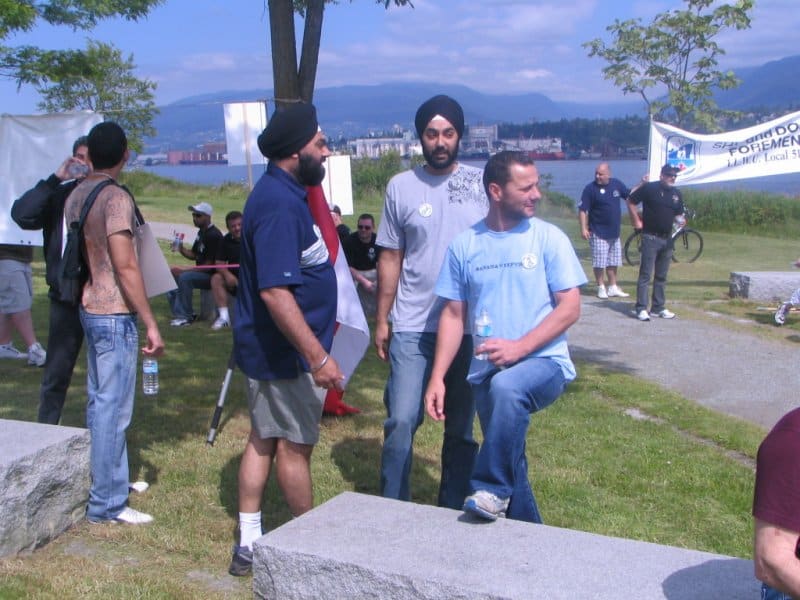
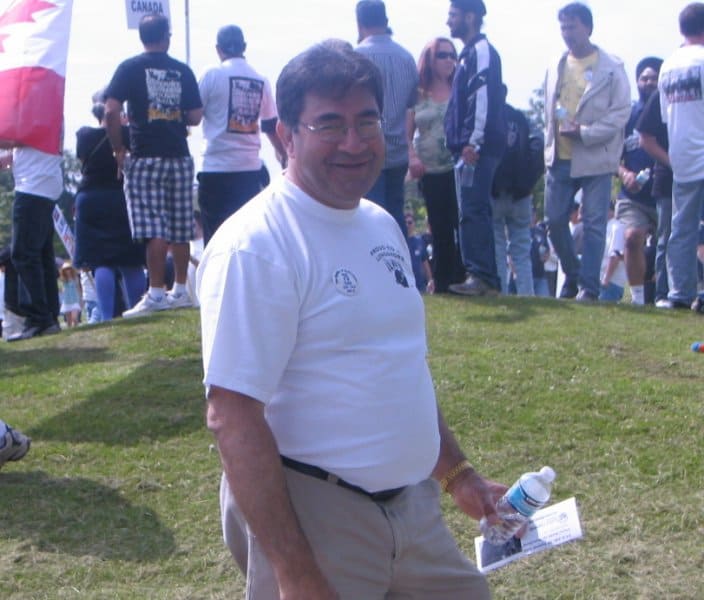
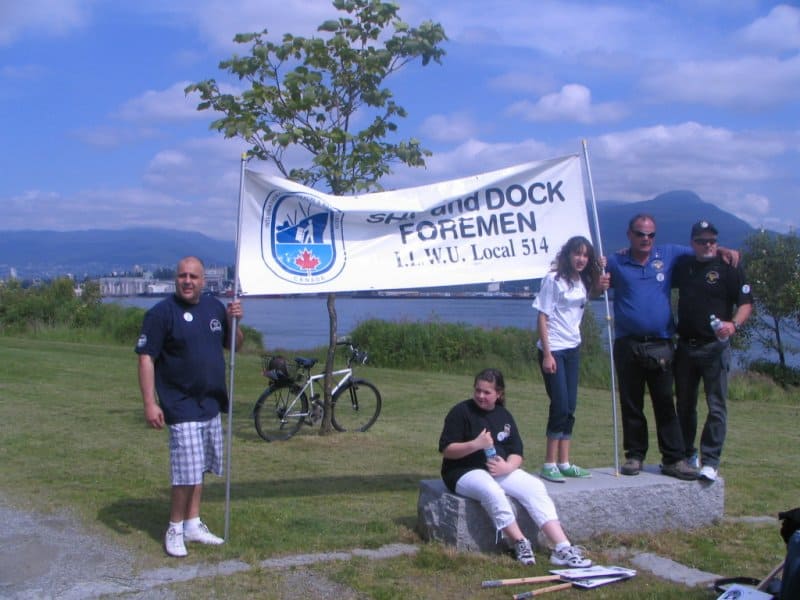
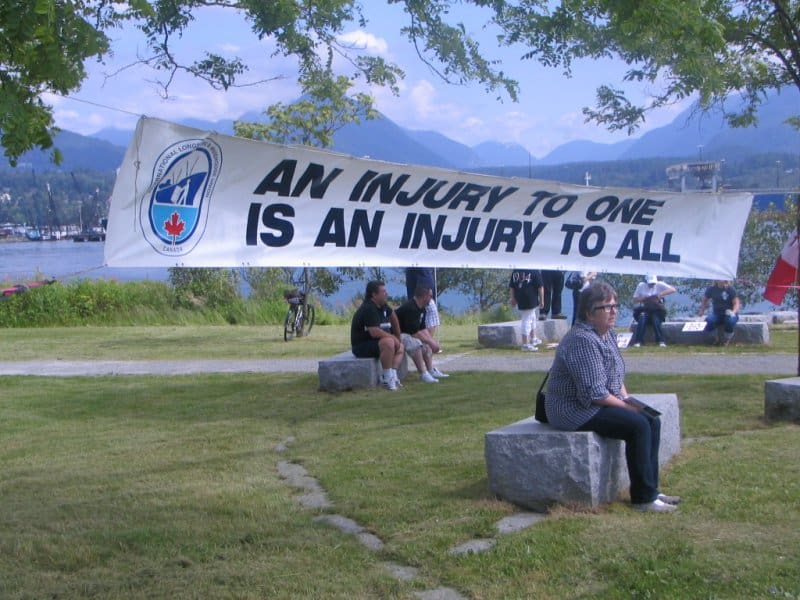
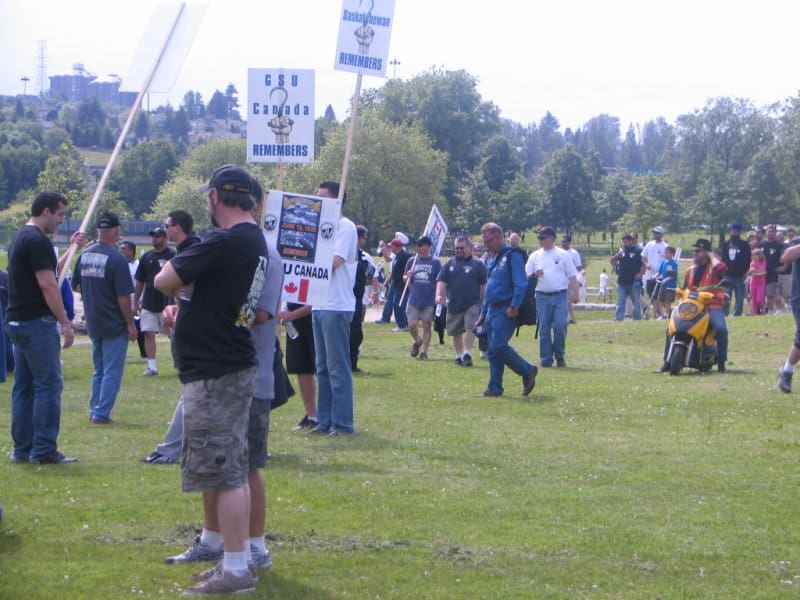
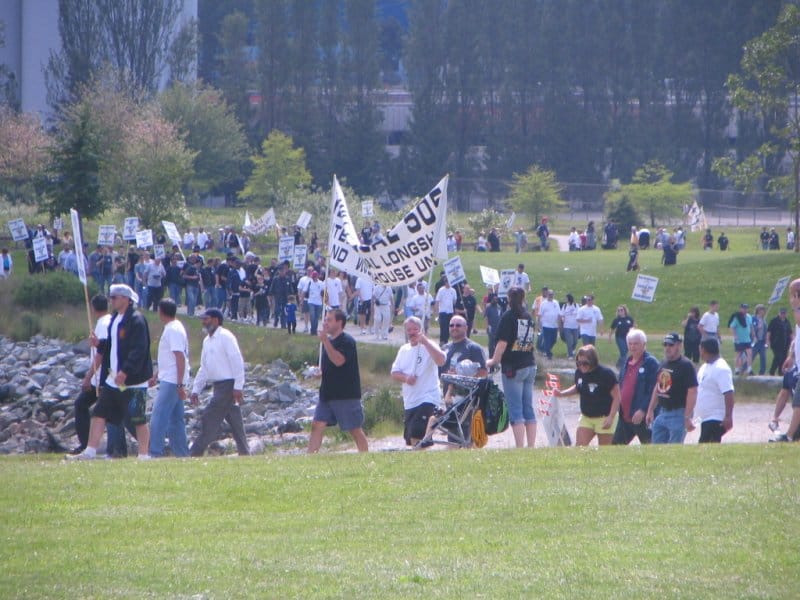
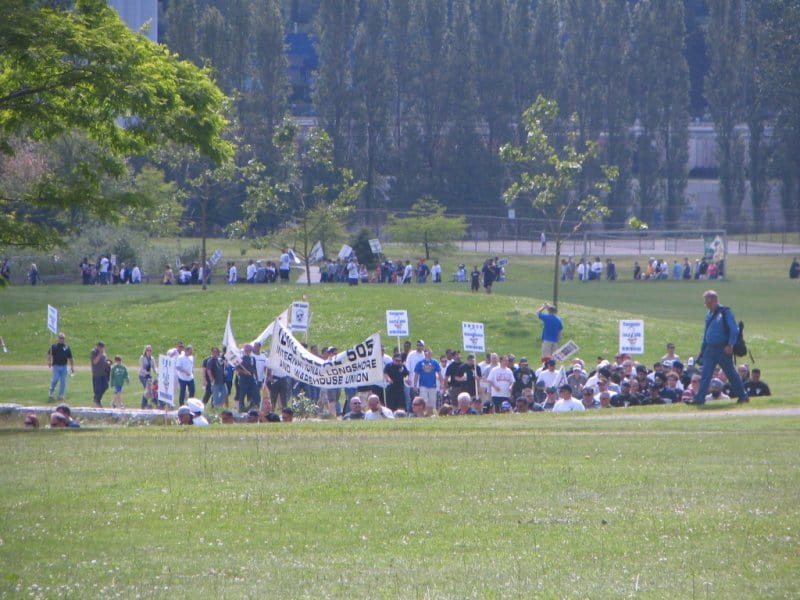
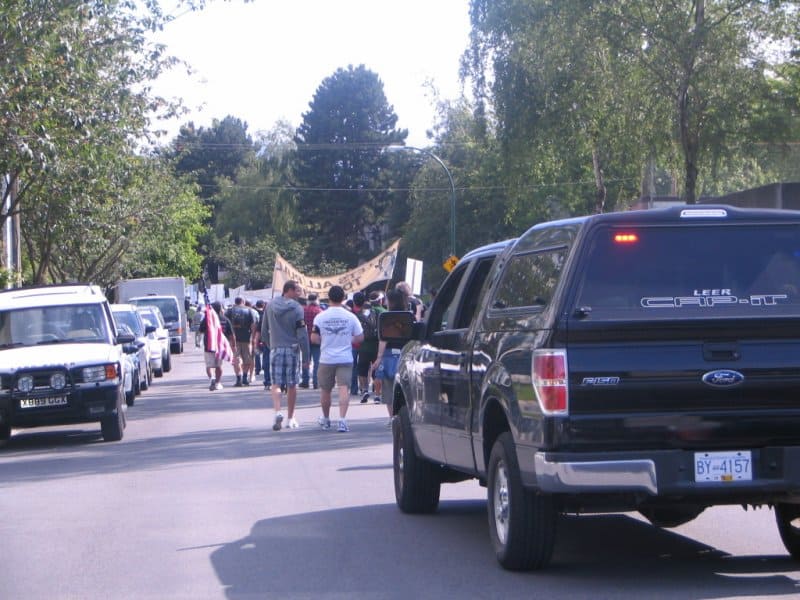
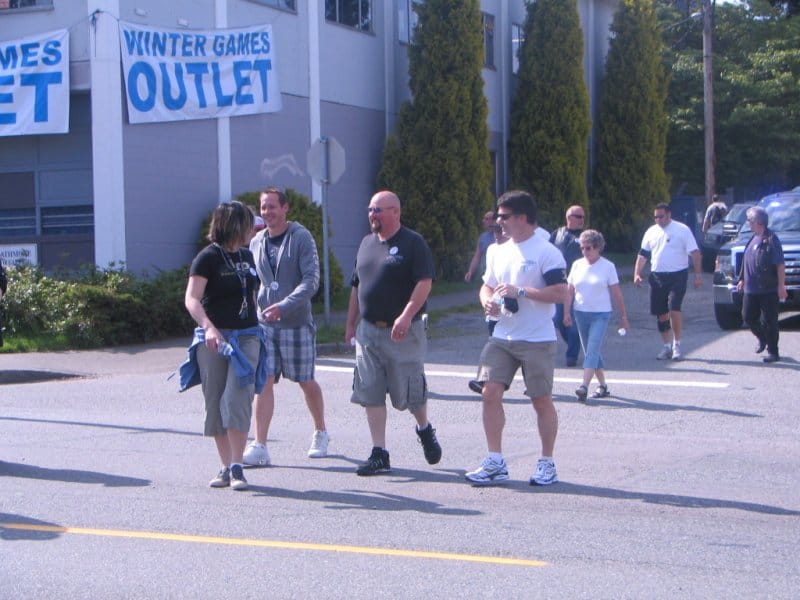
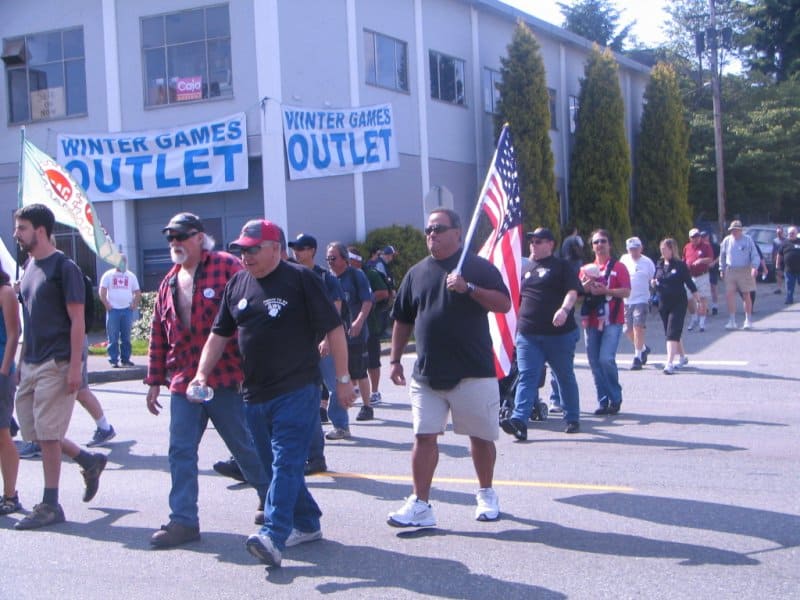
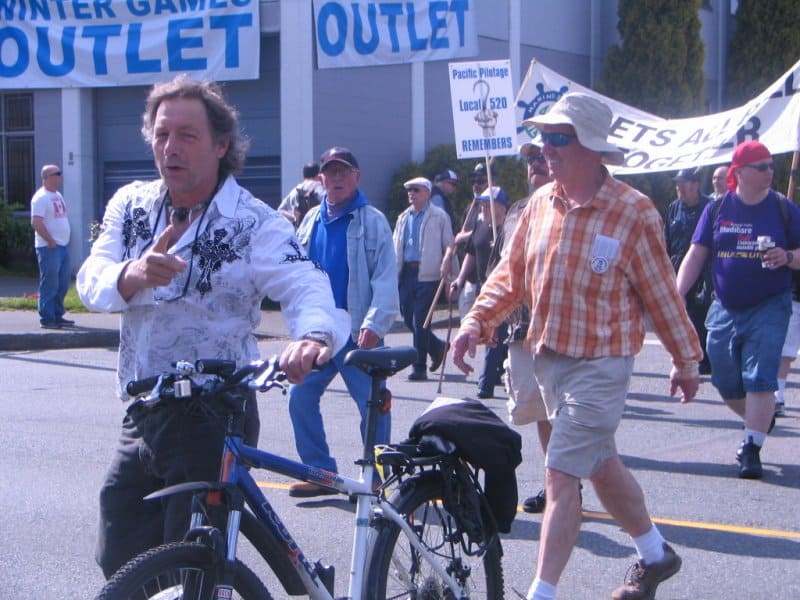
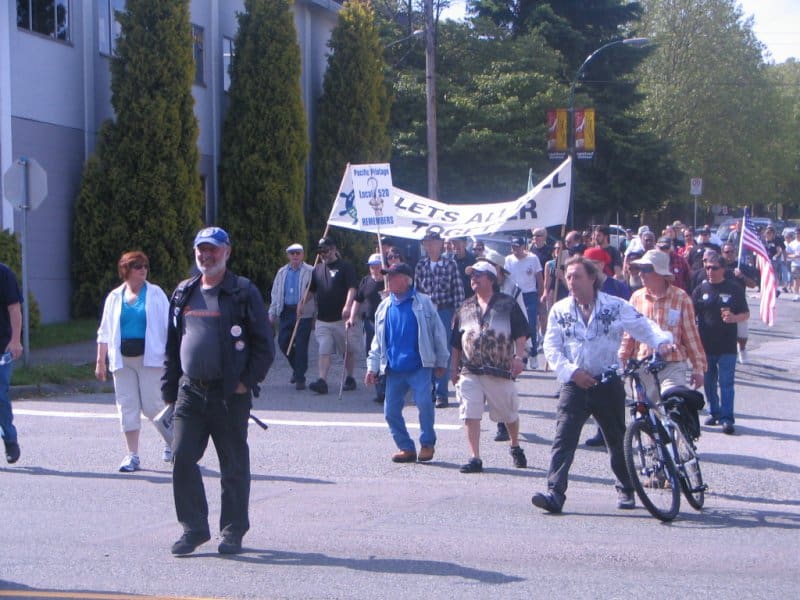
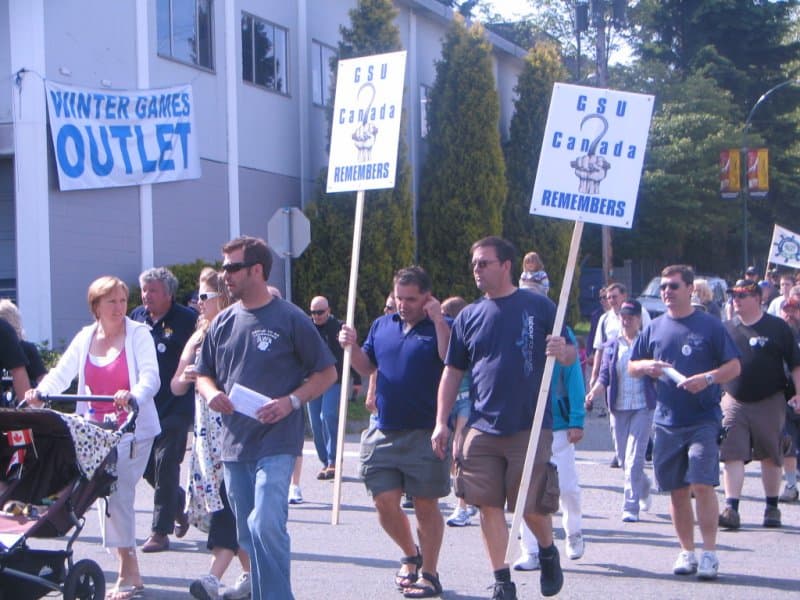
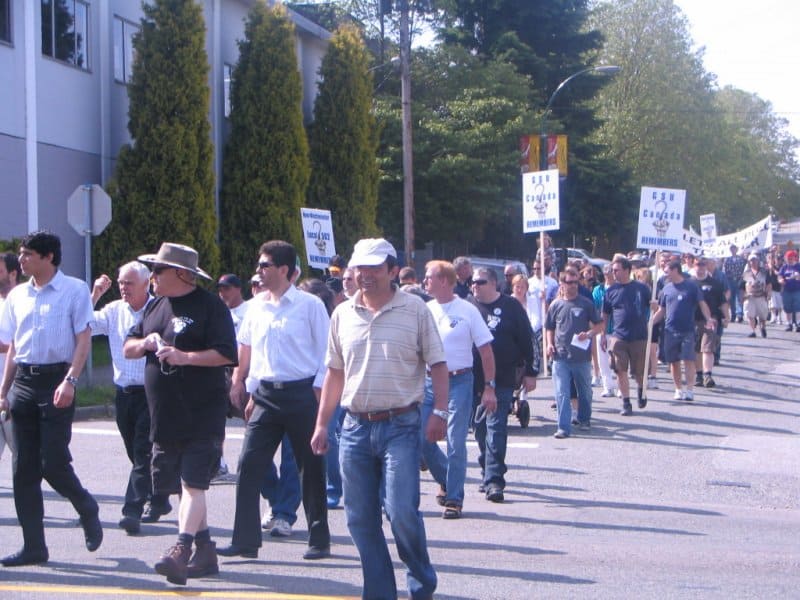
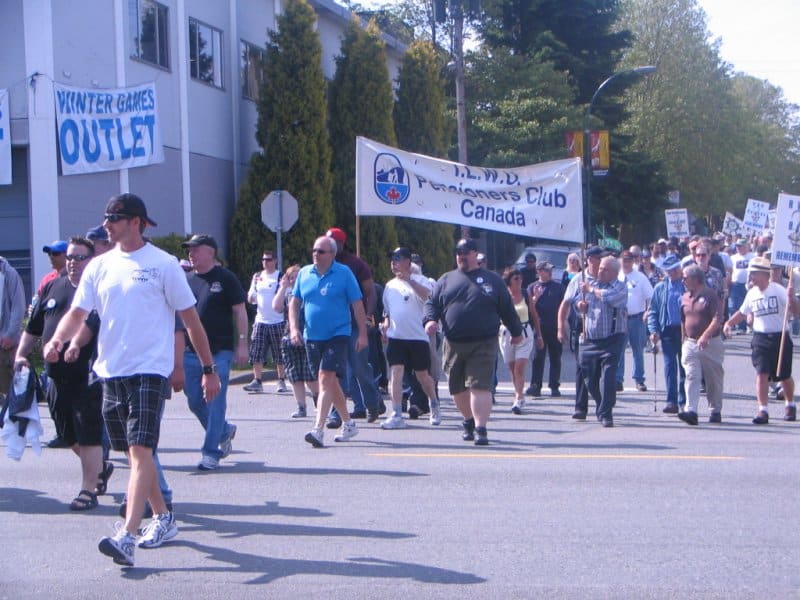
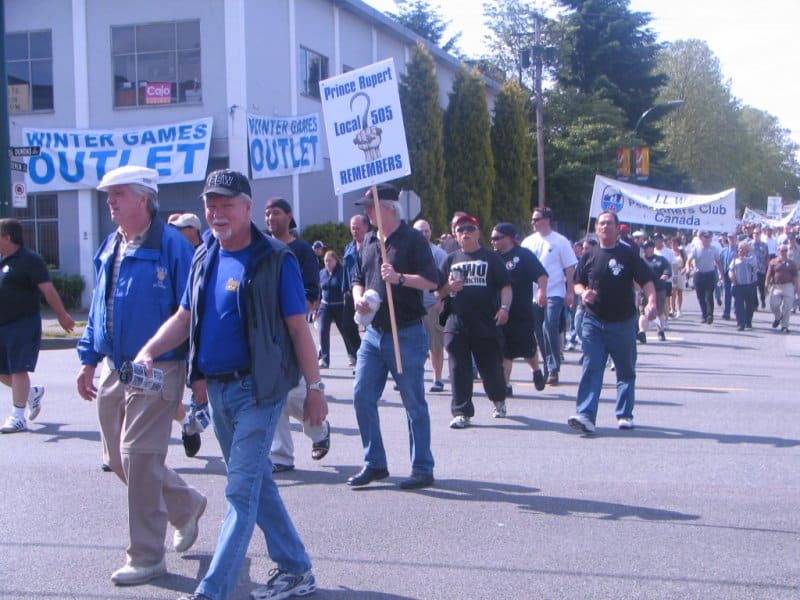
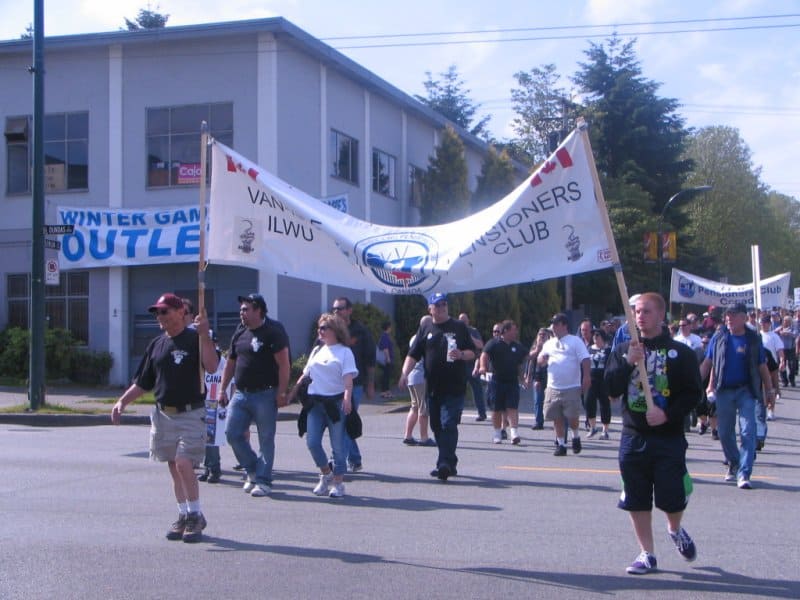
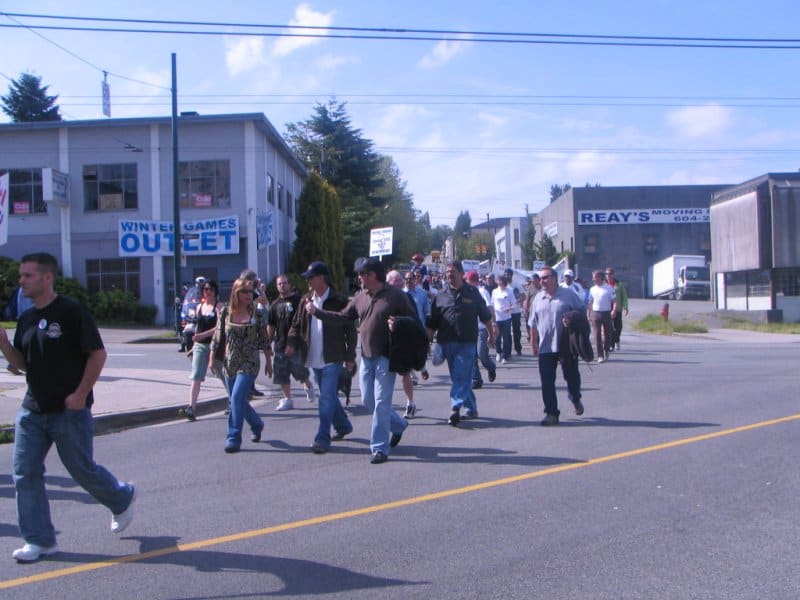
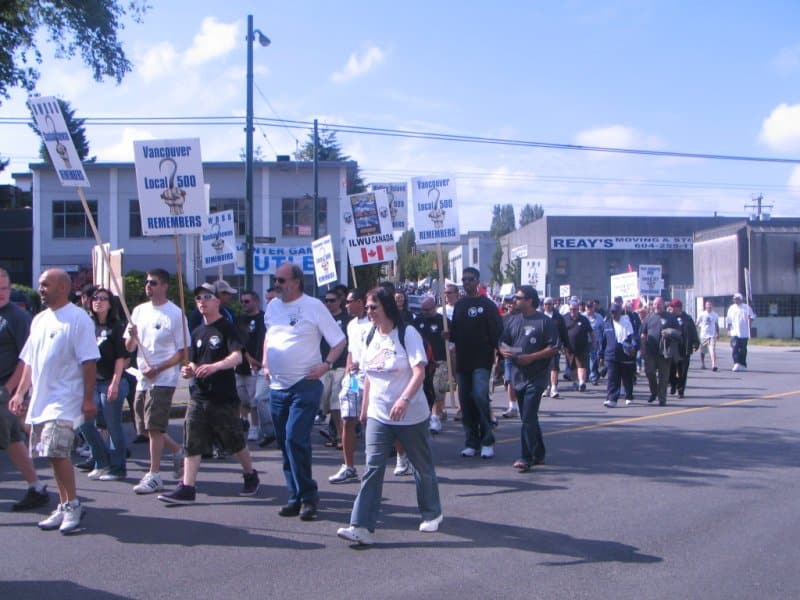
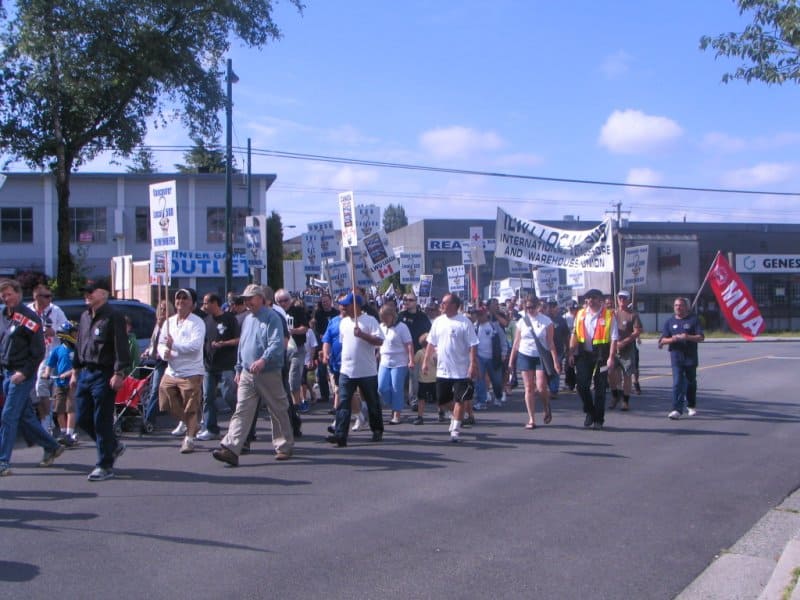
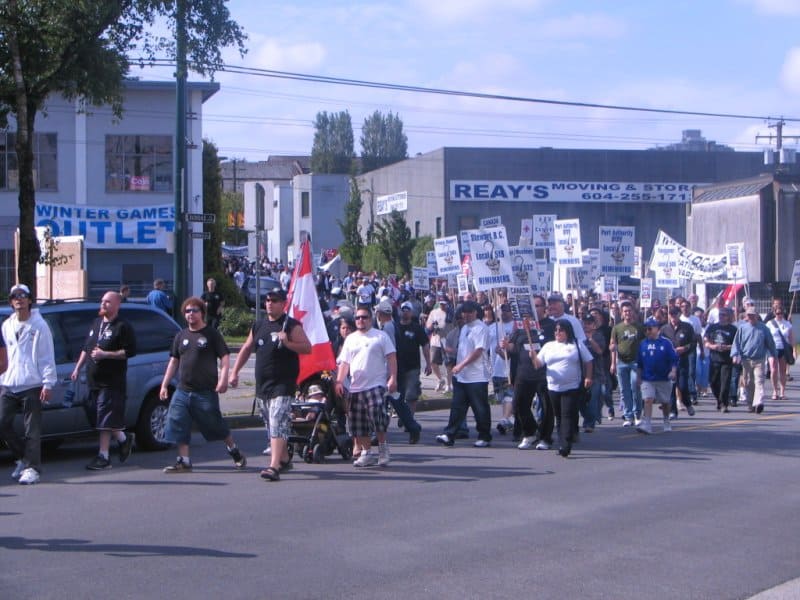
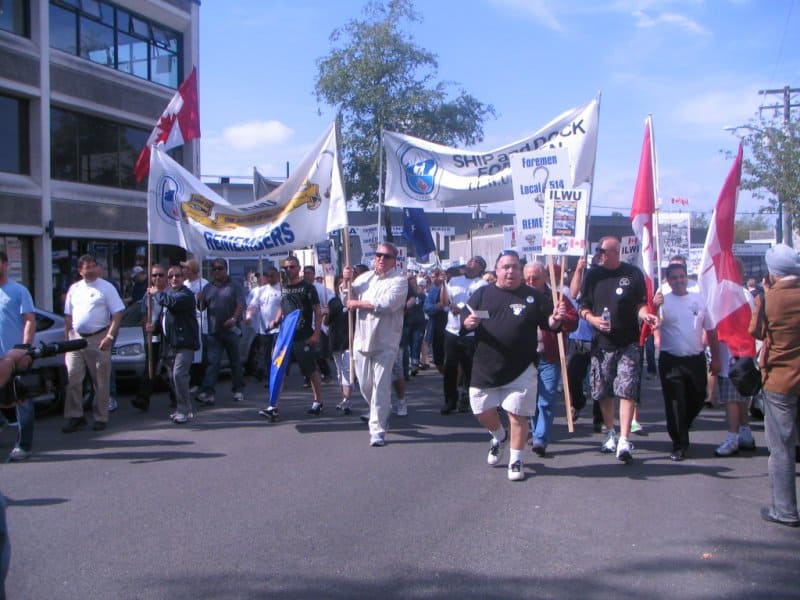
Photo from the archives

Crowd of workers making their way to the pier.
1935 – 2020
On June 18, 1935 an estimated 5,000 longshoremen and the unemployed workers marched to Ballantyne Pier to protest the employment of strikebreakers.
Led by Mickey O’Rourke holder of the Victoria Cross, they were met by a massed police force headed by Vancouver Police Chief W.W. Foster, a foster director of the Shipping Federation.
Tensions and antagonism had been building up between the Vancouver and District Waterfront Workers Association (V&DWWA and the Shipping Federation and it was only a matter of time before a showdown would take place.
The union was determined, under leader Ivan Emery, to take over the dispatching system, improve wage rates and to change the method of distribution of surplus work.
The Shipping Federation was adamantly opposed to these changes. It had determined that the time had come to break the union once more, just as it had in 1923.
The Shipping Federation had already established a new company union, the Canadian Waterfront Workers Association (CWWA), and according to the unions daily strike bulletin of July 18, they had announced the intention to break every maritime union in BC and replace them with company unions.
When newsprint in Powell River was loaded by non-union workers, bypassing their newly organized longshoremen, the Longshoremen and Water Transport Workers of Canada (the LWTWC was the federation uniting unions on the waterfront) placed the ships from Powell River on the unfair list.
When the newsprint from Powell River arrived in Vancouver, longshoremen, in line with the longstanding policy, refused to unload it.
The Shipping Federation responded by declaring the Oct. 1934 contract agreement at an end. The lockout and strike began on June 4, 1935.
The strike was supported along the west coast, including Victoria, Prince Rupert and the United States.
When peaceful marchers proceeded to Ballantyne Pier, police fired tear gas and charged into their ranks.
Mounted Police rode their horses through the marcher’s ranks, pursuing them through the streets and back down the lanes. They rode up the steps of houses in the neighborhood where women and children were gathered.
They swung their clubs indiscriminately in what the Vancouver Daily Province described as the “bloodiest hours in waterfront history.”
At least 100 people were injured by the police.
The Longshoremen’s Women’s Auxiliary established a first aid post in the Longshoremen’s Hall to treat the injured. The police smashed the windows and hurled tear gas bombs inside.
TEAR GAS BOMBS
HALT PORT STRIKERS;
EMORY IS ARRESTED
On December 9th, realizing that the strike was a losing battle, the union officially called off the strike.
It appeared the Shipping Federation has won a complete victory, but change – though stalled – could not be halted. Soon the CWWA and the Vancouver Longshoremen’s Association (VLA) were lobbying for equalization of earnings and rotation dispatch.
In 1941, the CWWA and the VLA amalgamated to present a unified body to the employer.
In 1943, the BC Council of Longshoremen (BCCL) brought together 6 independent unions including the CWWA, the Vancouver Longshoremen’s Association (VLA), the North Vancouver Longshoremen’s Association (NVLA), the ILWU Vancouver, the ILWU New Westminster and the International Longshoremen’s Association (ILA) Vancouver.
In March 1944, Vancouver became chartered ILWU Local 501 and in July and in July 1944, New Westminster became chartered ILWU Local 502 establishing ILWU jurisdiction in BC.
In 1945 the BCCL became the BC District Council (BCDC) and included Vancouver, Port Alberni, Prince Rupert and New Westminster.
The Battle of Ballantyne was a setback from which the Vancouver and district longshoremen resiliently managed to build a militant, representative union out of a lost strike.
The Shipping Federation failed to realize that the intermittent nature of longshore work, injustice of the dispatch and threat of capricious dismissal, combined with the skill needed to perform the job, left the longshoremen no choice but to look to each other in militant solidarity.
Warning: Trying to access array offset on value of type null in /home/ilwu/public_html/wp-content/themes/jupiter/views/blog/components/blog-single-about-author.php on line 18